


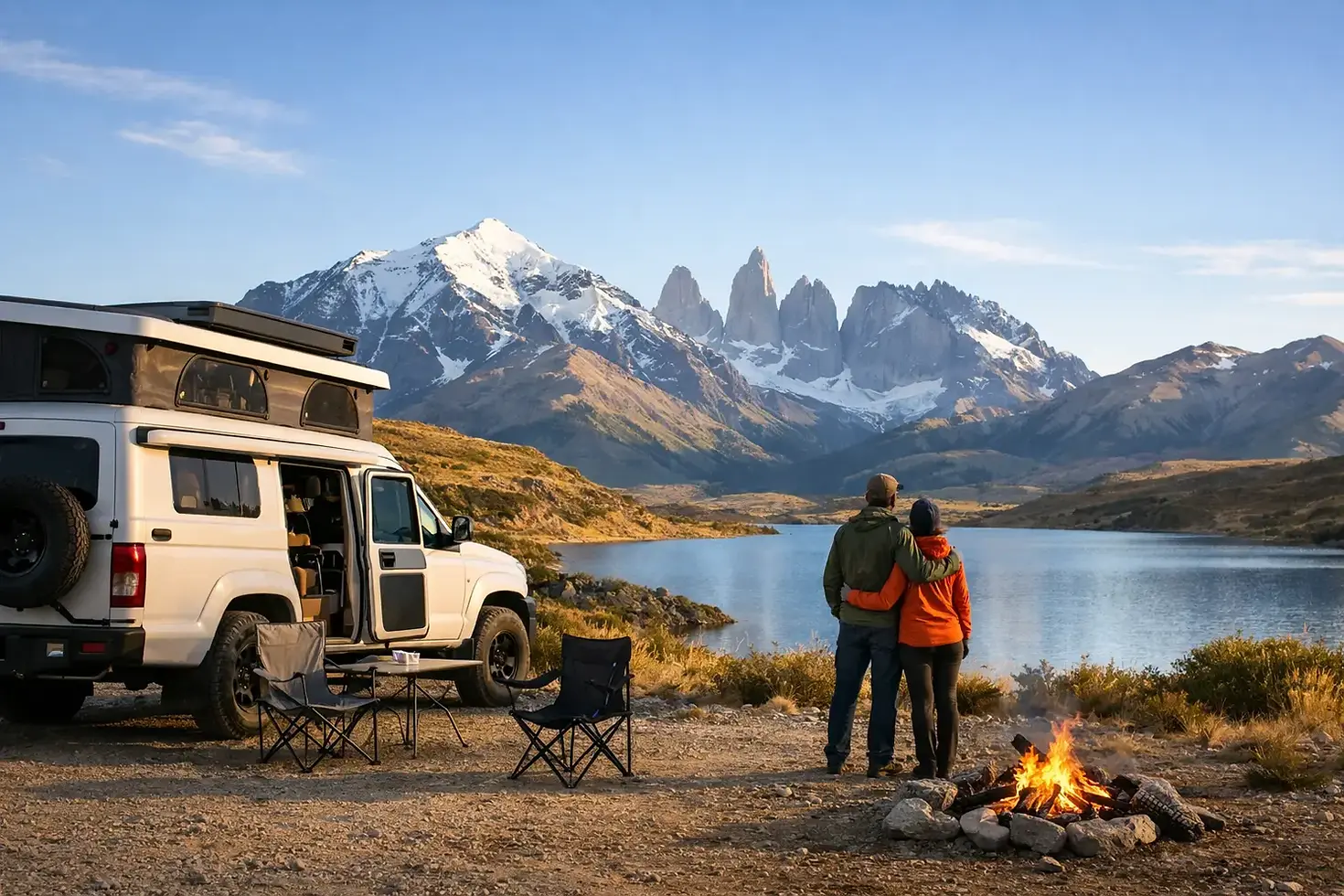
Can Tourists Rent Campers in Chile? Yes, They Can
A camper gives you a very different Chile trip from a bus pass and a hotel booking. You can wake up near a surf break, carry your hiking gear through Patagonia, and change plans when the weather moves in. But can tourists rent campers in Chile? Yes. International visitors can rent campervans, RVs, and 4WD campers, provided they meet the rental company’s age, license, deposit, and insurance requirements.
For a short holiday or a one-way trip with fixed dates, renting is usually the fastest route onto the road. There is no ownership transfer, no Chilean tax number to arrange, and no resale to manage at the end. The key is choosing the right vehicle and understanding where you can legally take it before you commit to the itinerary.
Can tourists rent campers in Chile without a local license?
In most cases, yes. A valid driver’s license from your home country is normally accepted for temporary visitors renting a standard campervan or passenger-vehicle-based RV. Your passport and the tourist entry document issued when you enter Chile are also commonly required. Rental companies will want to see the original documents, not just photos on your phone.
An International Driving Permit can be useful if your license is not in Spanish or uses a non-Roman alphabet. It is not always required for a standard rental, but it is inexpensive preparation and can make a roadside conversation or border process easier. Treat it as a supporting document, not a replacement for your valid home license.
Age requirements vary by vehicle type and insurer. Many companies rent to drivers age 25 and over, while some allow younger drivers with an additional fee or stricter coverage conditions. Large motorhomes and specialized 4WD campers may have higher minimum-age rules. Ask this before building your route around a particular vehicle.
What you need to rent a camper in Chile
The booking itself is straightforward, but the paperwork matters once you are on the road. Expect to provide your passport, driver’s license, tourist entry documentation, and a credit card for the security deposit. The main driver must usually be present at pickup, and every additional driver should be listed in the rental agreement.
Read the rental agreement with a focus on the operational details, not just the daily price. Confirm the deposit amount, deductible, mileage policy, roadside assistance coverage, pickup and return hours, and rules for unpaved roads. A low daily rate can look less attractive if it comes with limited mileage, a high deductible, or restrictions that do not match your intended route.
Before leaving the depot, photograph the vehicle inside and out. Check the tires, windshield, awning, camping equipment, water system, gas bottle, electrical setup, and spare tire. Have the team show you how to switch between the house battery, solar charging, shore power, refrigerator, and water pump. Ten extra minutes at pickup can prevent a wasted afternoon in the Atacama Desert trying to diagnose a switch that was simply left off.
Insurance is not all the same
Basic insurance is commonly included or offered as part of a rental package, but it may carry a substantial deductible. Optional coverage can reduce that financial exposure, although exclusions often remain for tire damage, glass, underbody damage, water crossings, negligence, or driving on prohibited roads.
This is especially relevant in Chile because the most appealing routes are not always paved. Gravel is common in Patagonia, and conditions can change quickly after wind, rain, or heavy traffic. A 4WD vehicle may be capable of reaching remote areas, but that does not automatically mean the rental agreement permits every track. Capability and permission are two separate things.
Choose the camper for your route, not the photos
A compact campervan is usually the best choice for couples or solo travelers following the central coast, wine country, the Lake District, or a mostly paved Patagonia route. It is easier to park, uses less fuel, and handles cities and ferry terminals with less stress. It also makes sense for travelers who want simple sleeping and cooking facilities rather than a full RV setup.
A larger RV offers more interior space, storage, and comfort in wet or cold weather. The trade-off is size. Some campsites, town streets, fuel stations, and scenic pullouts are tighter than they appear online. Larger vehicles also use more fuel and can be less enjoyable on long gravel sections.
For travelers carrying surfboards, kitesurf gear, mountain bikes, climbing equipment, or extended camping supplies, a 4WD camper can be the right tool. It provides more flexibility for remote access and rougher conditions, but it costs more and requires more careful route planning. If your trip is mainly Santiago, Valparaíso, Pucón, Puerto Varas, and established Patagonia highlights, paying for 4WD may not add much value.
Can a rental camper cross from Chile into Argentina?
Often, yes, but never assume it is included. Crossing an international border in a rental vehicle requires written authorization from the registered owner or rental company. This paperwork must be prepared in advance, and it may need notarization or other formal treatment depending on the crossing and the vehicle’s registration status.
Tell the rental provider every country you plan to visit before booking, not at pickup. Argentina is the most common cross-border request for travelers moving through Patagonia, but permissions, insurance arrangements, and administrative lead times vary. A company may allow crossings at specific border posts, require a minimum notice period, charge an additional fee, or decline international travel for certain vehicle categories.
You will also need to follow both countries’ border rules. Chile has strict agricultural controls, so do not arrive with fresh fruit, vegetables, meat, honey, seeds, or other restricted food items. Declare what you are carrying when required. A quick border crossing can become a long one if you are unpacking a camper full of groceries that cannot enter.
Build flexibility into the schedule. Southern border crossings can be affected by wind, snow, ferry timing, road conditions, and seasonal demand. Keep your vehicle documents, rental agreement, cross-border authorization, and insurance paperwork together in a dry folder that is easy to reach. Border officers do not need your packing system to be creative.
Where can you sleep with a camper in Chile?
Chile has excellent formal campgrounds, especially around lakes, national parks, beaches, and major overland routes. These are the easiest option when you need showers, charging, laundry, a secure place to park, or local advice on weather and road conditions. In peak summer months, reserve popular areas early, particularly in Patagonia and near well-known national parks.
Wild camping is more nuanced. It may be tolerated in some remote areas, but it is not a blanket right, and it is not appropriate everywhere. Private land, protected areas, beaches, urban waterfronts, and roadside pullouts can have restrictions or enforcement. Use established sites where possible, follow local signage, keep a low profile, and leave no waste behind.
National parks deserve special attention. Many require reservations for camping and restrict overnight stays to designated areas. A camper does not give you permission to sleep at any trailhead. Plan the hiking permit, campsite, and vehicle parking situation as one piece of the trip.
Renting versus buying for a longer South America trip
Renting is the clear choice when you have a few weeks, want a defined Chile itinerary, or would rather avoid administrative tasks. You pick up a prepared vehicle, travel, return it, and fly out. The daily cost is higher, but your time commitment is low and your exit is simple.
For trips of three months or more, buying can become the more practical option, particularly if Chile is only the start of a longer South American route. However, foreign buyers need to account for the Chilean RUT process, ownership-transfer timing, vehicle documentation, insurance, and a realistic resale plan. The purchase price is only part of the decision. The real question is whether you have enough time to buy correctly and sell without sacrificing the final weeks of your trip.
Suzi Santiago helps travelers make that decision before they commit, whether the right answer is a ready-to-go camper rental or a vehicle ownership plan built for a longer overland journey.
A practical booking timeline
For travel in December through February, book as early as possible. Chilean summer is high season, and quality camper inventory is limited, especially for automatic vehicles, 4WD campers, and one-way itineraries. For shoulder season travel, you may find more choice, but Patagonia weather makes vehicle suitability and heating more important.
Confirm cross-border plans before paying a nonrefundable deposit. Then leave room in your itinerary for the real pace of camper travel: grocery stops, water fills, dump stations, wind delays, gravel roads, and the occasional day when the best plan is simply staying put. A camper trip works best when the vehicle gives you freedom, not a rigid schedule to chase.


Comments