


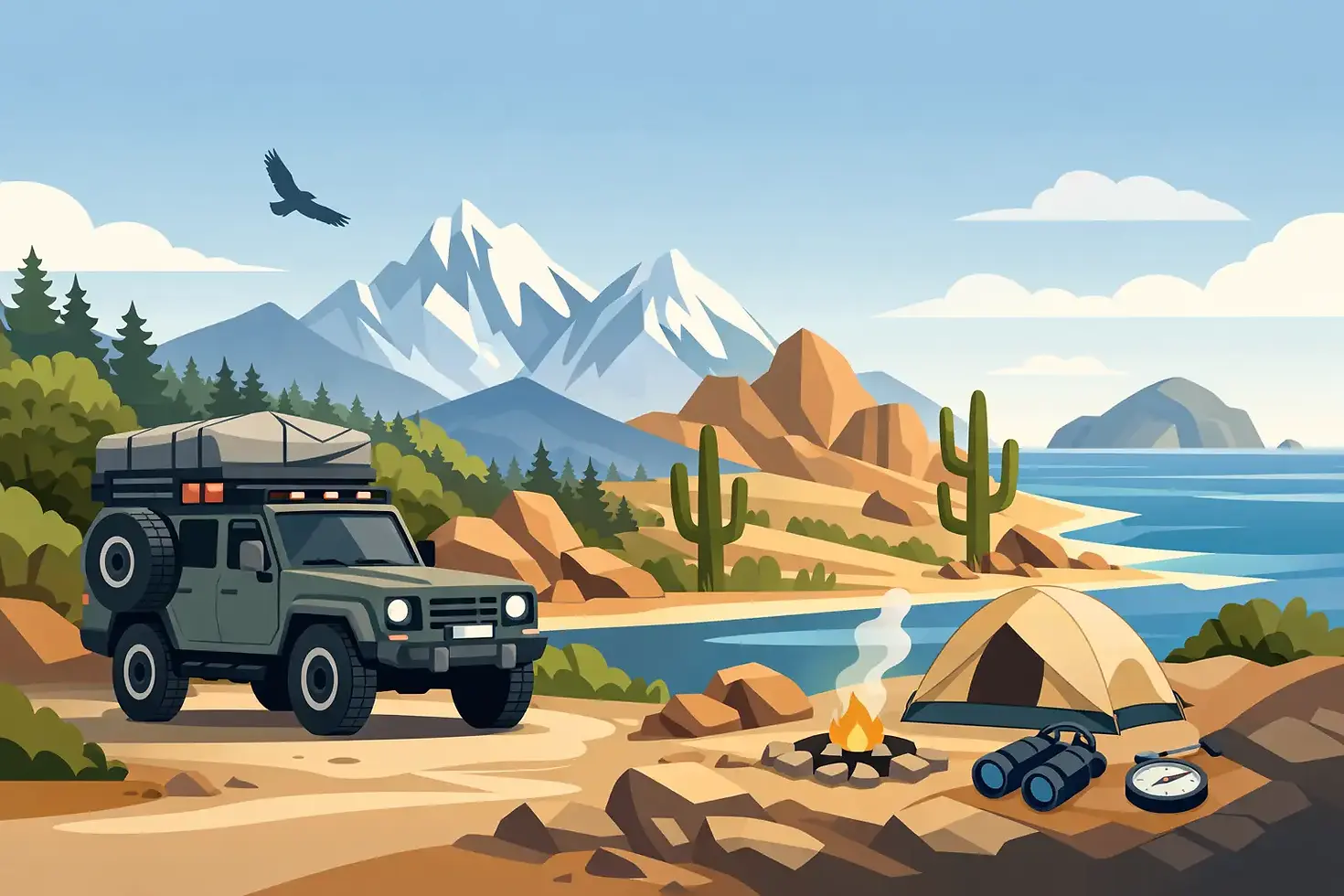
How to Choose an Overland Vehicle for Chile
Your vehicle choice decides whether the road to a remote surf break, high-altitude pass, or Patagonian trailhead feels like freedom or a daily compromise. Knowing how to choose an overland vehicle starts with the trip you actually plan to take, not the vehicle that looks best in a parking lot.
For South America, the right setup must work across long paved distances, rough gravel, wind, changing weather, border crossings, and the practical reality of buying, registering, and eventually selling as a foreign traveler. A good decision protects your route and your time.
Start With the Trip, Not the Vehicle
Before comparing campers and 4WDs, define three things: your travel duration, your intended route, and how self-sufficient you need to be. These answers narrow the field quickly.
For trips shorter than three months, renting is usually the practical choice. You avoid the ownership process, resale timing, and the risk of losing valuable travel weeks at either end of the trip. You can arrive, collect a prepared vehicle, and start driving.
For journeys of three months or longer, buying can make more sense. It gives you greater flexibility to customize your setup, travel at your own pace, and recover part of your budget through resale. The key is allowing enough time for the administrative process and having an exit strategy before you buy.
Your route matters just as much. If your plan centers on major routes, established campgrounds, cities, and the Carretera Austral, a campervan may give you the best balance of comfort, storage, and cost. If you expect deep sand, rough tracks, high-clearance river approaches, remote mountain roads, or access to isolated kitesurfing and surfing spots, a 4WD is often worth the trade-off in living space.
Do not assume that every South American road requires a lifted 4WD. Many of the continent's most memorable routes are accessible in a well-maintained van or SUV. On the other hand, do not choose a low-clearance vehicle if one difficult access road is central to your trip. A vehicle should support your priorities, not force you to rewrite them.
Choose the Right Type of Overland Vehicle
Campervan: Best for comfort and long-term living
A campervan is a strong choice for couples, solo travelers, and digital nomads who expect to live in the vehicle for weeks or months. You gain an indoor sleeping area, organized storage, a basic cooking setup, and better weather protection when Patagonia delivers rain and wind for several days in a row.
The compromise is size. Campervans can be less capable on narrow, steep, muddy, or deeply rutted tracks. They also consume more fuel than smaller vehicles and may be harder to park in dense cities. Still, for a road trip focused on scenic highways and extended travel, a compact campervan is often the most comfortable and efficient option.
4WD with camping equipment: Best for remote access
A 4WD vehicle is the practical choice when the destination is the point. It offers more ground clearance, better traction, and the confidence to handle rougher roads when conditions change. It is particularly useful for travelers carrying sports equipment and reaching less-developed areas beyond the main tourist routes.
The trade-off is that daily life can be more basic. Unless the vehicle has a built-in camper conversion, you may sleep in a rooftop tent or ground tent and prepare meals outdoors. That is easy in the Atacama Desert and less appealing during cold rain in southern Chile. Consider how often you will move camps, how much gear you carry, and how comfortable you are setting up and packing down every day.
Larger motorhome or truck camper: Best for space, with limits
A larger RV or truck camper provides the most interior room, more water capacity, and greater comfort for families or travelers spending long periods off-grid. It can be an excellent choice for a slower itinerary with frequent wild camping.
But more space brings more restrictions. Larger vehicles are harder to maneuver, consume more fuel, and can limit access to smaller roads, urban parking, and certain remote campsites. Unless you truly need the room, a smaller vehicle usually gives you more route options in Chile and Argentina.
Check the Details That Affect Everyday Travel
The most expensive mistake is buying a vehicle based on its exterior condition while overlooking the systems you will depend on every day. Condition matters more than accessories. A simple, reliable vehicle with basic camping equipment is generally a better overland choice than a heavily modified vehicle with mechanical uncertainty.
Start with maintenance history. Ask what work has been completed recently, when the tires were replaced, whether the suspension has been inspected, and whether the cooling system, battery, brakes, and drivetrain are ready for extended travel. Chile's long distances expose weak maintenance quickly.
Then assess the living setup honestly. Can you sleep comfortably without rebuilding the interior every night? Is there enough storage for clothing, food, recovery gear, and outdoor equipment? Are the electrical system, fridge, lights, water storage, and stove suited to your expected travel style? A vehicle that works for a weekend can become frustrating after two months on the road.
Fuel type and range also deserve attention. Gasoline and diesel availability is generally good on major routes, but distances between stations can be significant in Patagonia and remote northern regions. You do not need the largest fuel tank available, but you do need a realistic understanding of consumption, range, and where you will refuel.
Think About Weight, Not Just Storage
Overlanders often bring too much. Surfboards, kitesurfing equipment, bicycles, climbing gear, laptops, cameras, recovery equipment, food, and water all add up. A vehicle can look spacious while carrying more weight than its suspension, tires, and braking system should handle.
Keep your build simple and your weight controlled. Heavy roof loads affect handling in wind, which is especially relevant in Patagonia. Too much gear on the roof also makes it harder to access equipment and can reduce fuel economy. If you are traveling with specialized gear, choose the vehicle around that gear from the beginning rather than trying to fit it in later.
A practical question helps here: where will each major item live while you are driving, sleeping, and cooking? If the answer is unclear, the vehicle is probably too small or the packing plan needs work.
Factor in Chilean Ownership and Border Logistics
For foreign travelers, choosing an overland vehicle in Chile is not only a mechanical decision. It is also an ownership and paperwork decision.
A non-resident generally needs a Chilean investor RUT to purchase a vehicle in their own name. The RUT process can take around five business days when documents are prepared correctly. Ownership transfer requires further documentation and can take up to eight weeks, depending on the vehicle, seller, and administrative timing. That does not mean you need to wait eight weeks before traveling, but it does mean you should plan the purchase process early and avoid building an itinerary around last-minute assumptions.
Cross-border travel adds another layer. If Chile and Argentina are part of your plan, make sure the ownership documents and vehicle authorization are correct before approaching the border. A vehicle that is cheap but impossible to take on your intended route is not a bargain.
This is where a concierge-style purchase process saves real trip time. Suzi Santiago helps international travelers secure the required RUT, manage the purchase documentation, plan realistic timing, and prepare for resale rather than leaving those details until the end of the journey.
Budget for the Whole Vehicle Lifecycle
Your purchase price is only the opening number. Build a budget that includes registration costs, insurance, maintenance, tires if needed, camping upgrades, fuel, border-related requirements, and the likely cost of resale support.
Set aside a mechanical contingency fund even if the vehicle has been checked carefully. Rough roads, long distances, and normal wear are part of overland travel. The goal is not to expect a problem but to avoid having a small repair derail your route or force a rushed sale.
Resale should influence your choice from day one. Common, well-maintained vehicles with a clear service record are easier to sell than unusual builds with complicated modifications. Keep receipts, avoid unnecessary changes, and maintain the vehicle throughout the trip. The best exit strategy begins when you buy, not in your final week in Santiago.
Make the Decision in the Right Order
Choose your trip length first. Then decide whether your route truly requires 4WD, calculate how much living space and gear storage you need, and confirm that the vehicle can be owned, insured, and taken across your planned borders. Only after those questions are answered should color, accessories, and cosmetic details enter the conversation.
The right overland vehicle is the one that gives you enough capability for the roads you want to drive, enough comfort for the days you want to spend in it, and a realistic path in and out of ownership. Give yourself time to choose well, and the vehicle becomes part of the trip you came to South America to have, not the problem you spend the trip solving.


Comments