


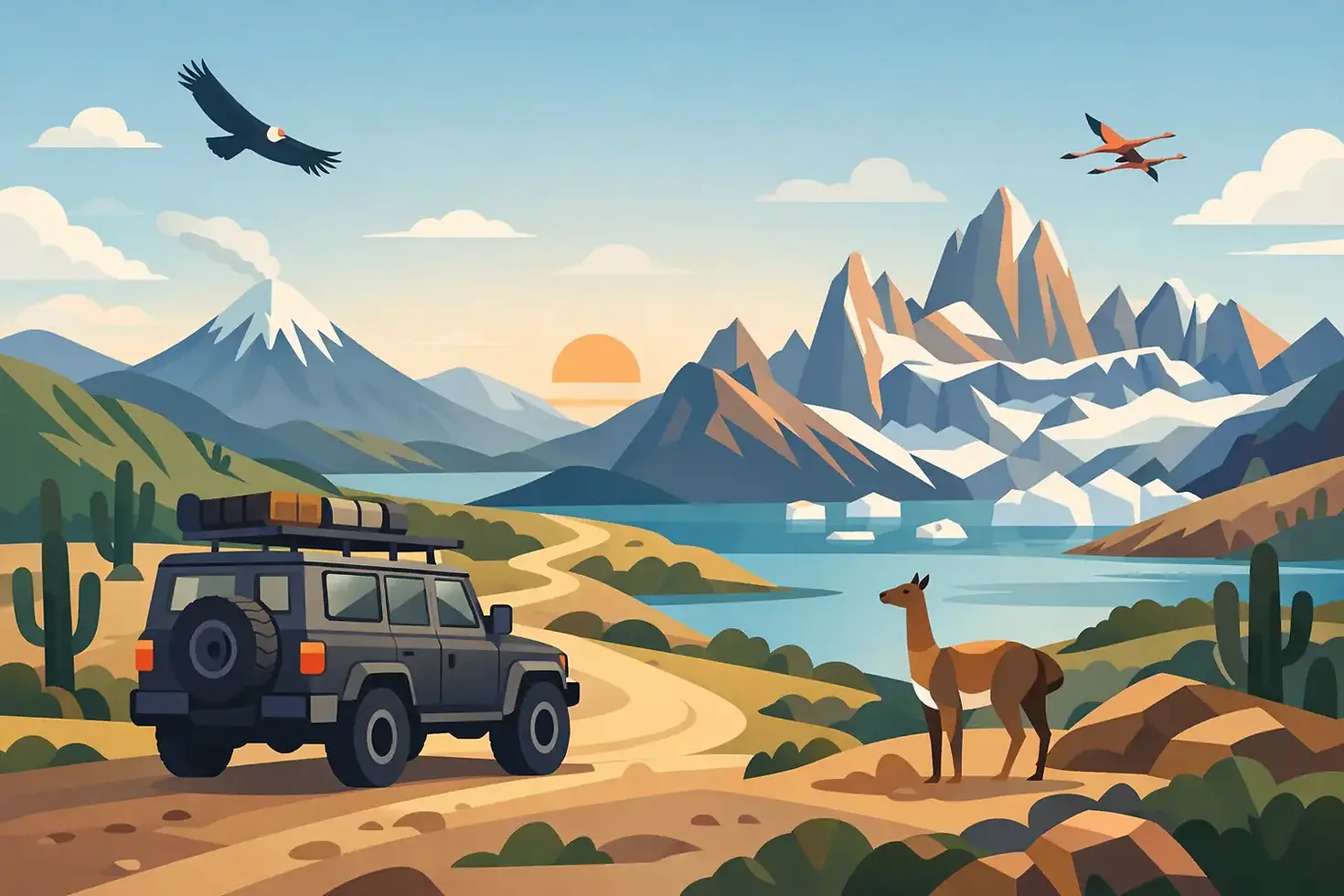
A Guide to Overlanding Chile and Argentina
Patagonia looks simple on a map until you realize your route may cross the Andes more than once, fuel stops can be far apart, and one paperwork delay can cost a week of good weather. That is why a real guide to overlanding Chile and Argentina needs to start with logistics, not daydreams. If you get the vehicle, timing, and border process right, the trip opens up fast. If you do not, the admin can eat the exact freedom you came for.
Why Chile and Argentina work so well for overlanding
These two countries are one of the best long-range overland pairings in the world because they complement each other. Chile gives you Pacific access, desert routes in the north, and a long, narrow geography that makes it easy to move between climate zones. Argentina gives you huge distances, classic steppe driving, lower-density camping options in many regions, and straightforward links to major highlights like Bariloche, El Chalten, and Ushuaia.
The trade-off is that this is not a single-country road trip. Most strong itineraries move back and forth between Chile and Argentina based on weather, road conditions, ferry schedules, and what kind of driving you actually want. That makes border-readiness a core part of the plan from day one.
Guide to overlanding Chile and Argentina: rent or buy?
This is the first decision to make, and it should be based on trip length more than enthusiasm. For shorter trips, renting is usually the cleaner move. You start driving immediately, avoid ownership transfer timelines, and keep your trip focused on travel rather than admin.
For longer trips, buying often makes more sense financially and operationally. If you are planning three months or more, especially if Chile and Argentina are only the beginning of a bigger South America route, owning a vehicle can give you more flexibility and a better exit strategy. The key is that foreigners cannot treat a vehicle purchase in Chile like buying a used car back home. There are legal and administrative steps, and those steps have real timing attached to them.
A practical rule is simple. Rent if your priority is speed and simplicity. Buy if your priority is long-duration freedom and you have enough runway to handle setup and resale properly.
What type of vehicle makes sense
The right vehicle depends on your route, season, and comfort threshold. A campervan works well for travelers who want easier living, faster camp setup, and mostly established roads. It is a strong fit for central Chile, the Lake District, much of Patagonia in stable conditions, and travelers balancing work and travel.
A 4WD with camping capability is usually the better choice if your plan includes rougher ripio, more remote routes, extra gear, or shoulder-season travel. It also gives you more confidence if you are carrying surfboards, kitesurf gear, climbing equipment, or trying to reach less-developed camping areas.
Bigger is not always better. Large rigs can be comfortable, but they are less forgiving on narrow roads, in wind, and at some ferry or city parking situations. Smaller vehicles are easier to maneuver and often cheaper to fuel, but they can wear you down on a multi-month trip if your living setup is too tight. The right answer is usually the one that matches your actual route, not your idealized one.
Timing matters more than most travelers expect
Chile and Argentina reward seasonal planning. Patagonia has a relatively short prime window, and weather can shift fast even in summer. Northern Chile and northwest Argentina can be excellent outside peak southern season, which is why many long-term travelers structure their route in phases instead of trying to do everything at once.
If you are buying in Chile, timing matters twice. First, you need enough time to complete the purchase process. Second, you need enough trip length left to justify ownership. A rushed purchase at the front end or a rushed sale at the back end can cost far more than travelers expect in lost days, temporary accommodation, and route compromises.
As a working benchmark, foreigners buying in Chile should plan around administrative timelines rather than hoping things happen instantly. For example, obtaining the investor RUT can take around 5 business days, while ownership transfer can take much longer, often measured in weeks rather than days. That matters if your flights are fixed.
Border crossings are manageable if the paperwork is right
Crossing between Chile and Argentina is routine for prepared overlanders. It becomes stressful when the vehicle documents do not match the driver, the ownership transfer is incomplete, or travelers assume a rental can automatically cross without prior authorization.
You should expect to manage personal immigration, vehicle import paperwork, and inspection procedures each time you cross. Food restrictions, especially entering Chile, are real and enforced. This is not the place to improvise with fresh produce hidden in a drawer.
If you rent, confirm cross-border permission in writing before your trip begins. If you buy, make sure the ownership and vehicle documents are structured correctly from the start. This is one of the biggest reasons international travelers use a concierge-style purchase process. The problem is usually not the crossing itself. The problem is showing up with incomplete or mismatched paperwork after building a route that depends on moving freely between both countries.
Route planning: think in corridors, not checklists
A good overland route through Chile and Argentina is not about collecting every famous stop. It is about building a realistic corridor with weather, mileage, and service intervals in mind.
In the south, many travelers begin around Santiago or Puerto Montt, move into the Chilean Lake District, cross to Bariloche, and then shape Patagonia based on season and interests. The Carretera Austral is one of the strongest overland experiences in Chile, but it takes time and patience. Distances are not huge by North American standards, yet average speeds can be low, and ferry timing affects daily progress.
On the Argentina side, Ruta 40 is iconic for a reason, but it is not one endless cinematic drive. Sections vary a lot in surface, services, and exposure to wind. Some travelers prefer using Argentina for longer transit days and Chile for more intricate scenic driving. That is often the right balance.
In the north, the contrast changes completely. The Atacama region in Chile pairs well with Salta, Jujuy, and the puna routes in northwest Argentina. This is where altitude, water, and fuel planning start to matter more than rain and wind. It is beautiful, but it is less forgiving if you are underprepared.
Fuel, cash flow, and road reality
Overlanders used to North America often underestimate the operational side of this trip. Fuel availability is generally manageable on established routes, but you should not assume the next station is open, stocked, or accepting the card you want to use. In remote stretches, filling early is the correct habit.
Road surfaces change constantly. You can move from smooth pavement to washboard gravel in the same day. In Patagonia, wind affects fatigue more than raw mileage. In mountain areas, elevation and switchbacks slow progress. This is why realistic daily distances matter. A 250-mile day can feel easy in one region and long in another.
Budgeting also changes when you stay mobile for months. Campsites, occasional cabins, repairs, border timing, and slower resale windows all affect total cost. Buying can save money over a long enough trip, but only when the entry and exit are handled efficiently.
The Chile purchase process for foreigners
This is where many good trips either become efficient or get delayed. Foreign travelers usually need a Chilean tax ID structure in place before they can move through the vehicle purchase process correctly. In practice, that often means getting an investor RUT and setting up the purchase with guidance from someone who does this regularly.
The important point is not just whether you can buy a vehicle. It is whether you can do it without burning travel time on avoidable mistakes. Ownership transfer in Chile is not a same-day handoff in the way many US travelers expect. The vehicle may be physically with you before every registry step is fully reflected, which is why you need clear guidance on what is legally usable, when, and for which routes.
Just as important is the exit plan. Selling a vehicle at the end of a trip sounds easy until your flight date is close and buyer timing does not cooperate. The best purchase strategy includes the resale strategy from the beginning. That is one reason travelers doing longer journeys work with teams like Suzi Santiago instead of trying to piece the process together after arrival.
What to do before you book flights
First, decide whether your trip is a rental trip or an ownership trip. That one choice affects nearly everything else. Then build your route around climate windows, not social media highlights.
After that, work backward from the administrative realities. If you are buying, leave enough lead time for the RUT process, purchase support, ownership transfer, and eventual resale. If you are renting, confirm cross-border permissions, included equipment, mileage expectations, and where support is available if something mechanical happens far from a major city.
The travelers who enjoy this region most are usually not the ones with the most aggressive route. They are the ones whose logistics quietly work.
Chile and Argentina reward independence, but they reward preparation first. If you treat the paperwork and vehicle plan as part of the route, not a side task, you will spend a lot more of your trip where you wanted to be in the first place - driving.


Comments