


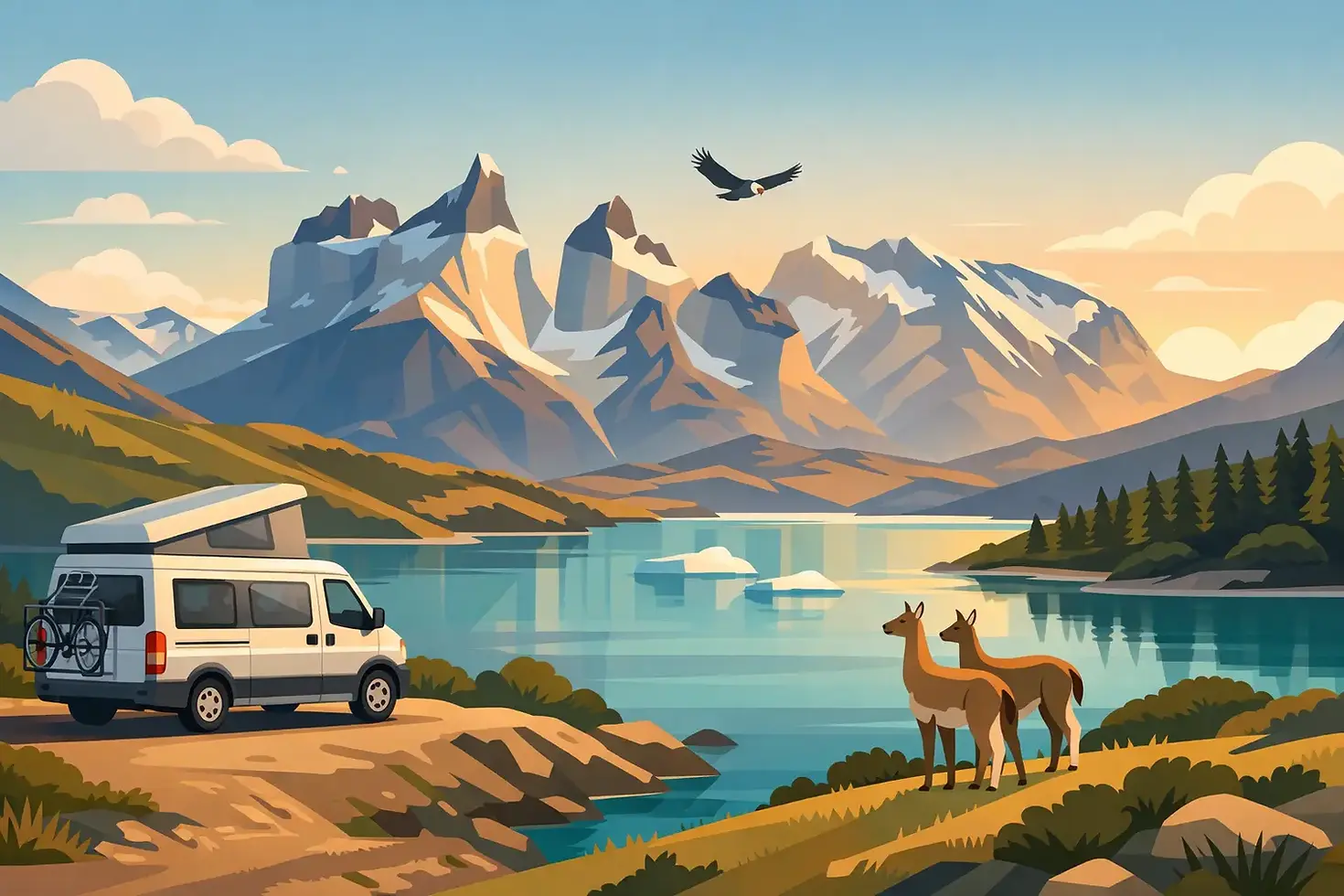
Patagonia Campervan Itinerary: 14 Days
Patagonia rewards good planning and punishes optimistic timing. A solid Patagonia campervan itinerary 14 days long needs to account for wind, gravel, border crossings, fuel range, and the simple fact that distances here look manageable on a map until you are driving them in real conditions.
For most travelers, the best 14-day camper route is not “see all of Chilean and Argentine Patagonia.” It is a selective loop or one-way trip built around a few major highlights, with enough buffer to absorb weather and road delays without turning every day into a transit day. The route below is designed for travelers who want the classic big scenery - mountains, steppe, glaciers, and remote roads - while keeping the trip realistic in a rented campervan.
Patagonia campervan itinerary 14 days: the smartest route
If you only have two weeks, the cleanest plan is to start in Punta Arenas or Puerto Natales, focus on Torres del Paine, cross into Argentina for El Calafate and El Chalten, then return to Chile. This gives you the highest concentration of major Patagonia highlights without forcing an exhausting one-way logistics puzzle.
You can do this route in a 2WD campervan in the main season if road conditions are stable, but that does not mean every road will be fast or comfortable. Gravel sections, wind gusts, and long service gaps are normal. If you are traveling shoulder season or want more flexibility on rougher roads, a more capable vehicle makes the trip easier.
Day 1: Arrive in Punta Arenas
Pick up your campervan, do a full vehicle handover, and buy supplies before leaving town. This is not the day to rush straight into the national parks. Use it to check heating, cooking gear, tires, spare tools, and charging setup. In Patagonia, losing half a day to a preventable equipment issue is far more frustrating than spending one organized night near your pickup point.
Punta Arenas is also one of the last easy places for a full supermarket run. Stock for several days, but do not overload the van with water and food you can replace later. Weight matters when you are driving in heavy wind.
Day 2: Punta Arenas to Puerto Natales
This is a manageable transfer day and a good first stretch to get used to the vehicle. Puerto Natales is your staging point for Torres del Paine, fuel, and any final weather checks.
Spend the night here if park conditions look uncertain. If the forecast is good and your timing works, some travelers continue toward the park the same day. We usually recommend sleeping in Puerto Natales first unless you arrived unusually early and still have plenty of daylight.
Day 3: Puerto Natales to Torres del Paine
Enter Torres del Paine early. Even if you are not planning major hikes, this is a park where slow driving is part of the experience. Wildlife sightings, viewpoints, and sudden weather shifts all affect timing.
Base yourself in one area instead of trying to relocate repeatedly. The park is not enormous, but road conditions and stops add up. A campsite or legal overnight stop with a strong location will save time and let you enjoy the place instead of constantly packing up.
Day 4: Torres del Paine full day
Use this day for viewpoints, short walks, and one longer activity if conditions are good. If you are trying to fit in the full Base Torres hike, plan around your fitness, daylight, and weather, not social media expectations. It is a demanding day and not the right call for everyone on a road trip schedule.
A better campervan strategy for many travelers is to combine scenic drives with shorter hikes and photography stops. That leaves you less weather-dependent and less likely to waste the next day recovering.
Day 5: Torres del Paine buffer day
This is the day many travelers try to cut. Keep it. Patagonia wind can shut down your plans quickly, and rain or low cloud can hide the very landscapes you came to see.
If everything goes perfectly, use this as another park day. If not, it protects the rest of your route. In a 14-day itinerary, one weather buffer is not excessive. It is disciplined planning.
Day 6: Torres del Paine to El Calafate
Today is your first cross-border day into Argentina. Border timing is variable, and you should never stack a long drive, a border crossing, and fixed afternoon plans unless you are comfortable dropping one of them.
Arrive in El Calafate with enough fuel and enough patience. This is a service town, not the most atmospheric stop in Patagonia, but it works well for resupply, showers, laundry, and a more comfortable reset after the park. Those practical stops matter on a two-week overland route.
Day 7: Perito Moreno Glacier
Perito Moreno deserves a full day. Unlike many glacier experiences, this one is straightforward to access and reliably rewarding even if your schedule is tight. The boardwalk system gives you different angles, and weather changes can make the glacier look completely different over a few hours.
This is also one of the easier major sights in Patagonia to plan around. That makes it valuable in a short itinerary. You are not gambling an entire day on difficult access or unclear conditions.
Day 8: El Calafate to El Chalten
Drive north to El Chalten, one of the strongest bases for hiking and mountain views in Argentine Patagonia. The road itself is part of the appeal, but watch fuel and departure time carefully. Services are better than on more remote routes, though you still should not assume every stop will have what you need.
Once in El Chalten, avoid overcommitting your first afternoon. Wind can be fierce, and the best local decision is often to settle in, check trail conditions, and start early the next morning.
Patagonia campervan itinerary 14 days in El Chalten
Day 9: El Chalten hiking day
Choose one major hike or a combination of shorter trails. Fitz Roy is the headline objective, but it is not mandatory for a successful trip. If cloud cover is poor or you want something less punishing, there are shorter options with excellent payoff.
The right decision here depends on weather, legs, and how much you want to protect the next travel day. Patagonia rewards flexibility more than stubbornness.
Day 10: Second El Chalten day
A second day here gives you a chance to react to mountain conditions. If yesterday was clear, do another trail or a lighter recovery day. If yesterday was clouded out, this is your second shot.
This is one of the best places in the itinerary to hold time because visibility matters so much. A famous skyline hidden by cloud is still a hidden skyline.
Day 11: El Chalten to El Calafate or border area
Start working your way south. Depending on your return plan, you can overnight in El Calafate again or position closer to the border. The trade-off is simple: a longer driving day now can make your final Chile segment calmer.
If you prefer less pressure, break the route conservatively. There is no prize for arriving tired and having no margin left.
Day 12: Return to Chile and Puerto Natales
Cross back into Chile and return to Puerto Natales. Build in extra time for the border, especially if weather is poor or traffic is heavier than expected.
This is a good night for reorganizing the van, dumping waste correctly, and checking what needs to be cleaned before vehicle return. Those small tasks are much easier to handle before the final day.
Day 13: Puerto Natales to Punta Arenas
Make the final drive back toward Punta Arenas. If your flight schedule allows, spend one last night near the return point rather than trying to hand back a vehicle on the same day as a major drive.
That extra separation protects you from road delays and gives you time for fuel refill, interior cleaning, and gear sort. It is a small buffer that often saves real stress.
Day 14: Vehicle return and departure
Return the campervan with margin, not at the last possible minute. If you are renting, allow time for inspection and airport transfer. If you are buying a vehicle for a longer South America trip rather than renting, this is exactly the kind of schedule pressure you want to avoid. For multi-month travel, buying can make sense, but for a 14-day Patagonia window, rental is almost always the cleaner decision.
What makes or breaks a 14-day Patagonia camper route
Weather is the first factor. Strong wind changes driving speed, hiking safety, and even how comfortable a night in the camper feels. Second is seasonality. Summer gives you longer daylight and more stable access, but also more demand. Shoulder season can be quieter and beautiful, but you need more tolerance for cold, closures, and shifting conditions.
Border logistics are the third factor. Crossing between Chile and Argentina is routine when documents are correct, but routine does not mean instant. If you are an international traveler handling vehicle logistics, permits, and timing for the first time, this is where experienced support matters. A good setup saves days, not just paperwork.
Finally, be honest about your travel style. If you want long hikes every other day, this route works. If you want to photograph sunrise and sunset in multiple places, you may need to cut a stop and stay longer in fewer bases. If you hate driving, Patagonia may feel bigger than expected. If you like open roads and self-sufficiency, it is one of the best camper regions in the world.
The best two-week Patagonia trip is not the one with the most pins on the map. It is the one that leaves enough room for the place to be Patagonia.


Comments