


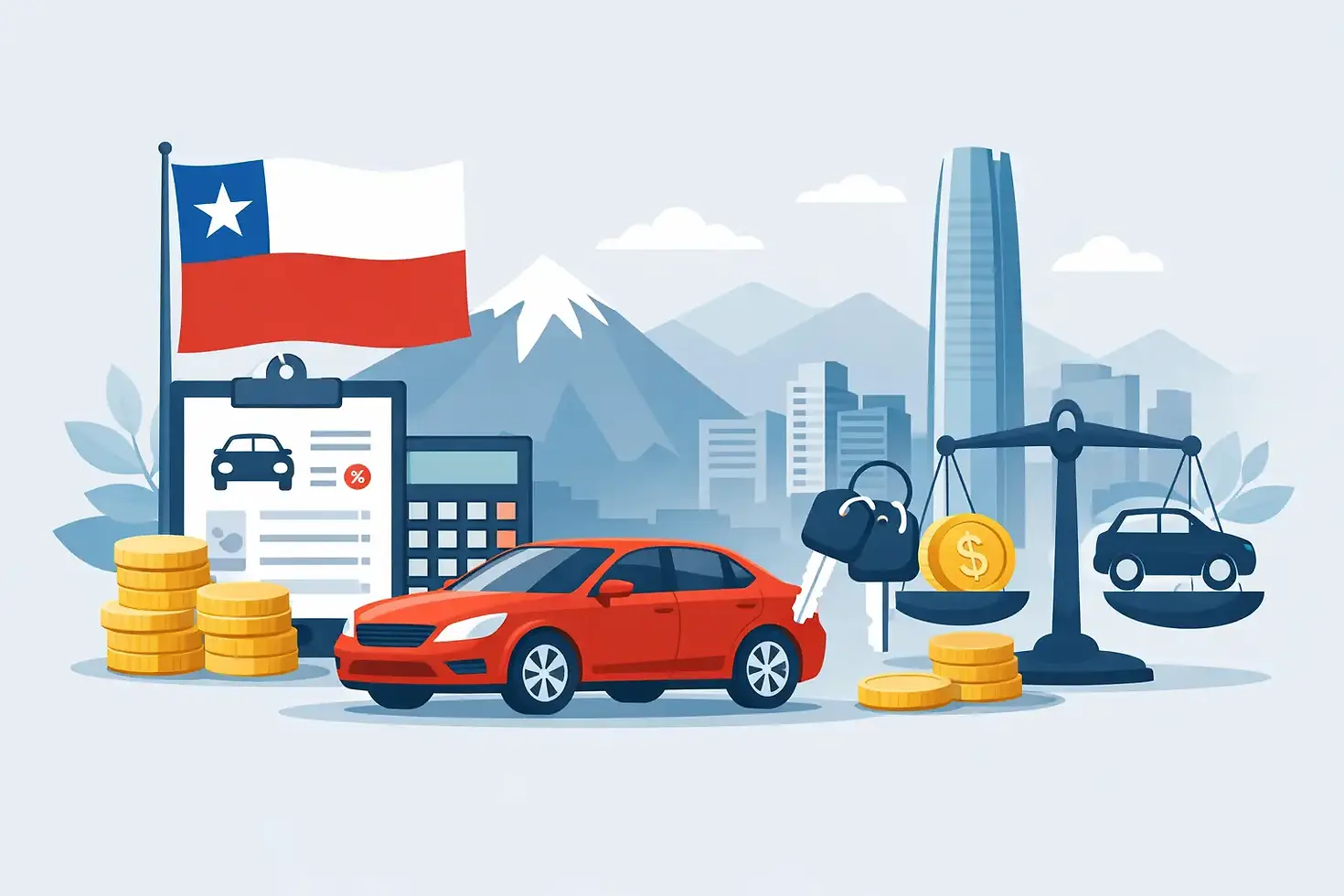
Chile Vehicle Purchase Taxes and Fees
If you are planning to buy a vehicle for a long South America trip, the numbers that matter are not just the sale price. Chile vehicle purchase taxes and fees can affect your budget, your timing, and in some cases whether buying makes more sense than renting.
For most foreign travelers, the good news is that Chile is not a market where surprise purchase taxes usually blow up the deal. The bigger issue is understanding which costs are one-time, which are administrative, and which can delay your trip if they are handled poorly. That is where many buyers lose time.
What counts as chile vehicle purchase taxes and fees?
In practical terms, you are usually dealing with four separate cost areas when buying a used vehicle in Chile: the agreed vehicle price, the transfer tax, notary and document costs, and any service or administrative support needed to make the purchase legal and workable as a non-resident.
If you are buying through a private party sale, the most common tax is the vehicle transfer tax tied to the ownership change. On top of that, there are smaller transactional costs for notarizing signatures, preparing paperwork, and registering the transfer correctly. Those smaller fees are not always expensive on their own, but they matter because each step depends on proper documentation.
For foreign buyers, there is also a practical category that is not technically a tax but functions like a real purchase cost: getting the legal and tax identity setup required to own a vehicle in Chile. If you do not already have the right RUT pathway in place, this is often the first obstacle.
The tax most buyers need to budget for
When travelers ask about taxes, they usually mean one thing: how much the government charges when ownership changes hands. In Chile, used vehicle purchases generally involve a transfer tax based on the vehicle value used for the transaction. The exact amount depends on the declared or assessed value and the current rules applied at the time of transfer.
That means you should not assume the tax is a flat number. It moves with the vehicle price, and authorities may use reference values rather than simply accepting any low number written into a contract. If a vehicle looks underpriced on paper, that can create problems.
For budgeting purposes, it is smarter to treat the transfer tax as a percentage-based cost rather than a fixed fee. If you are shopping in different price bands, your tax exposure rises with the vehicle value. A budget SUV and a fully built camper will not carry the same transfer tax burden.
Fees that are small on paper but big in practice
Notary fees, document certification, registration handling, and administrative charges are usually modest compared with the sale price of the vehicle. Even so, these are the costs that often create friction because they sit inside a process with strict sequencing.
A signature in the wrong place, an outdated document, or a mismatch between the seller details and the registration can slow things down far more than the fee itself. For travelers on a fixed entry window into Patagonia or Argentina, that delay matters more than the amount.
This is why we tell buyers to budget for both money and process. The direct fees may be manageable. The indirect cost of getting stuck in Santiago for extra days or weeks is what really hurts a trip.
New vs. used vehicles
Most international overlanders buying in Chile are purchasing used vehicles, not new ones. That is relevant because the tax structure and total transaction profile are different.
With a new vehicle, taxes are wrapped into a dealership environment, and the headline price may already reflect portions of the tax burden. With a used vehicle, you are focused more on transfer tax, ownership transfer documentation, and the administrative chain needed to make the vehicle legally yours.
For most travelers, a used vehicle is still the practical route. It lowers capital outlay, gives you better resale flexibility, and avoids tying up too much money in a depreciating asset for a trip that may only last a few months.
Foreign buyers need to think beyond the purchase price
The real question is not only what Chile vehicle purchase taxes and fees cost. It is whether you can complete the legal ownership path efficiently as a non-resident.
In Chile, vehicle ownership is tied to local administrative systems. Foreign travelers typically need a RUT before they can own a vehicle properly. Without it, the purchase process does not move in a useful way. This is where many people underestimate the timeline.
A tax bill can be paid in a day. Identity setup, document review, title transfer, and final registration updates can take much longer. If your trip is only six or eight weeks total, buying usually makes little sense. If you are traveling for three months or more, buying often starts to become viable, but only if the setup begins early and the paperwork is managed correctly.
Timing matters as much as cost
A common mistake is comparing rental cost versus purchase cost without factoring in transaction timing. On paper, buying can look cheaper over a longer journey. In reality, that only works if the purchase and eventual resale do not consume a big part of your trip.
In Chile, ownership transfer is not always instant. Even when the sale agreement is signed and the process is underway, the administrative completion can take weeks. That does not necessarily mean you cannot travel, but it does mean you need a properly structured purchase with a clear understanding of what is possible during the transfer period.
This is where experienced guidance earns its keep. The tax itself is rarely the main threat. Poor sequencing is.
How much should you budget overall?
For most buyers, a realistic budget should include the vehicle price plus a buffer for transfer tax, notary and admin fees, initial setup costs related to your ability to purchase, and post-purchase basics such as insurance, inspection status review, and any immediate maintenance.
That last category is worth mentioning because many travelers mentally separate it from purchase fees even though it affects the real acquisition cost. A cheap vehicle with expired paperwork, deferred service, or unclear compliance history can become more expensive than a better-prepared unit with a higher sale price.
The cleanest way to budget is to assume your total acquisition cost will be meaningfully higher than the sticker price. Not dramatically higher in most cases, but enough that buying at the very top of your budget is a mistake.
When buying makes sense despite the fees
If your plan is a multi-month route through Chile and Argentina with onward flexibility, buying often works well. You gain independence, you can carry gear, and you are not paying long-term rental pricing for every week on the road.
The taxes and fees are then part of a larger cost calculation, not a reason to avoid ownership. They become reasonable if spread across a long trip and handled efficiently.
If your trip is short, city-based, or limited to one region, the equation changes. In those cases, the time needed to set up ownership, pay the transfer costs, and later sell the vehicle can outweigh the financial upside. Renting is often the better operational choice even if the weekly rate looks higher.
The cheapest deal is not always the best deal
Travelers sometimes focus hard on lowering the transfer tax by targeting the lowest-priced vehicle possible. That can backfire.
A cheaper vehicle may come with more mechanical risk, weaker resale appeal, or messy paperwork. If it takes longer to sell at the end of your trip, any savings on taxes disappear quickly. The right vehicle is one that balances purchase cost, legal clarity, mechanical condition, and resale potential.
That is especially true for foreigners, because your exit strategy matters from day one. Buying well is only half the job. Selling efficiently is the other half.
A practical way to approach the process
Start with your route and trip length, not the vehicle listing. If you are under three months, renting usually deserves a serious look. If you are over three months, then budget for the full ownership path, including Chile vehicle purchase taxes and fees, before you compare options.
From there, confirm your RUT pathway, line up a vehicle with clean documentation, and build your timeline around administrative reality rather than optimistic assumptions. That is the difference between starting your trip on schedule and spending your first weeks doing paperwork.
If you want the process to work, treat the taxes as predictable and the bureaucracy as the real variable. The money is usually manageable. Your travel time is the part worth protecting.
A good purchase in Chile is not just one with a fair price. It is one that gets you on the road fast, keeps you legal, and leaves you with a realistic resale path when the trip ends.


Comments