


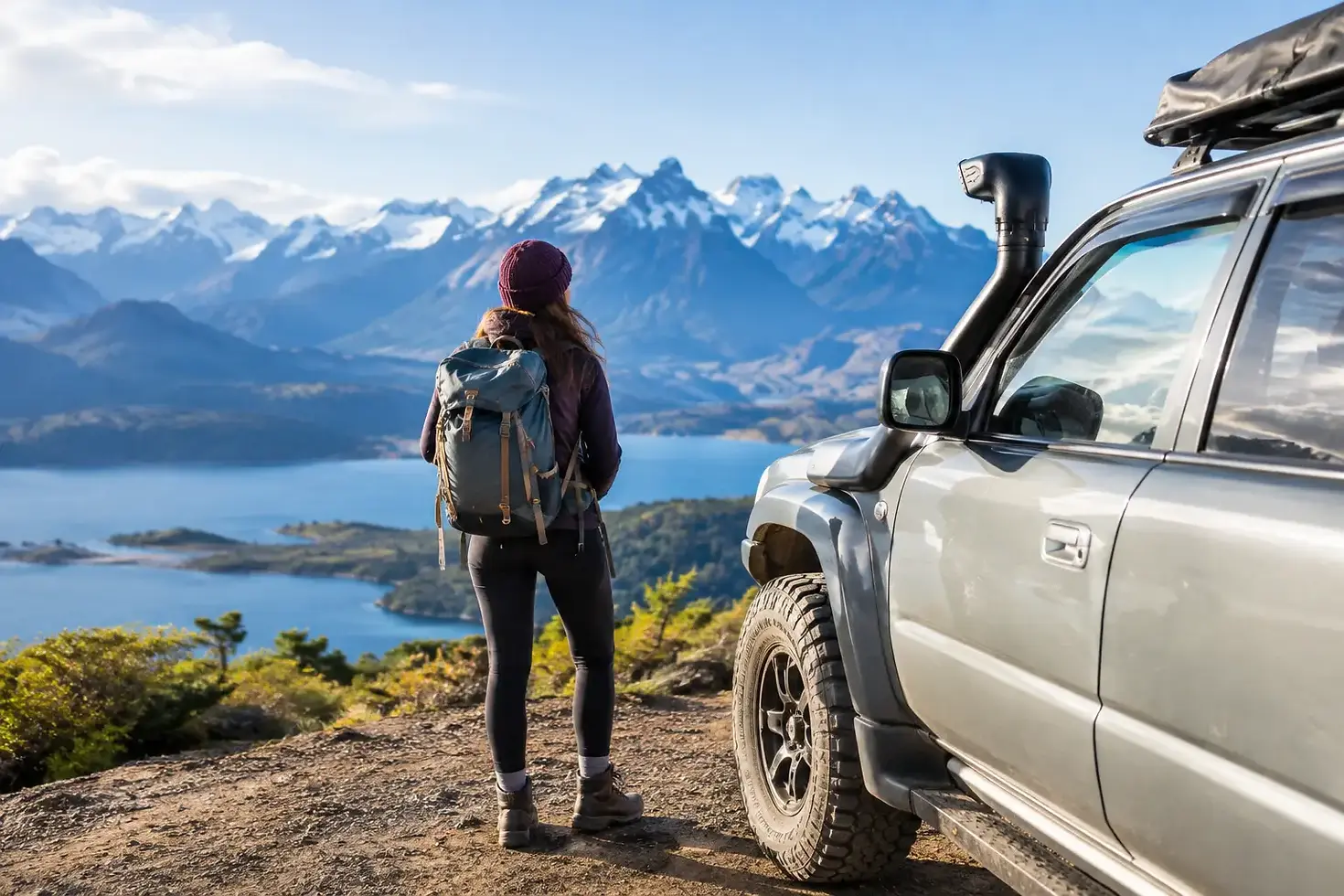
Overland Travel - Buy or Rent in South America?
The Atacama can be on your itinerary by next week. The harder question is whether you will still be waiting on paperwork when you could be driving south toward Patagonia. Overland travel in South America gives you the freedom to carry your gear, change your route, and stay longer in places that deserve more than a one-night stop. But that freedom depends on choosing the right vehicle plan before you arrive.
For most international travelers, the decision comes down to trip length. Renting is the practical choice for a focused trip with fixed dates. Buying can make more sense for a journey of three months or longer, especially if Chile is your starting point and you plan to continue through Argentina and beyond. The right answer is not just about the daily rate. It is about how much trip time you are prepared to spend on administration, maintenance, border crossings, and eventually selling the vehicle.
Start Your Overland Travel Plan With Trip Length
A rental keeps the process simple. You arrive, collect a prepared campervan or 4WD, and begin driving. It is a strong option for trips of a few weeks to a couple of months, travelers who want predictable costs, and anyone who does not want to manage vehicle ownership abroad. It also works well if your route begins and ends in the same country.
Buying gives you more control over a long route. You can choose a vehicle suited to the way you travel, carry surfboards, kitesurfing equipment, bikes, recovery gear, or a full remote-work setup, and stay flexible when weather or road conditions change your plans. Ownership can also reduce the total cost of a longer journey compared with a multi-month rental, depending on the vehicle, season, and resale value.
The trade-off is time. Foreigners cannot simply arrive in Chile, hand over cash, and drive away with no further steps. You need the right tax identification, correct purchase documentation, and a realistic transfer timeline. At the end of the trip, you need a resale plan that does not leave you parked in Santiago for weeks while your flight date approaches.
A useful rule is straightforward: rent when your time is short or your route is fixed. Consider buying when you have at least three months, can be flexible with the first stages of your trip, and want to travel farther without being tied to a return date.
Why Chile Is a Practical Place to Begin
Chile is one of the most logical starting points for a self-driven South American journey. Roads are generally well maintained, services are accessible near major population centers, and the country offers an immediate range of landscapes: coast, vineyards, high desert, lakes, volcanoes, and Patagonia. Santiago also provides the practical infrastructure travelers need to organize a vehicle, stock up on equipment, and begin heading north or south.
For many long-term travelers, the most sensible sequence is Chile first, Argentina second, then onward according to season and border conditions. This matters because Chile and Argentina are closely connected by multiple border crossings, but they are still separate countries with their own rules. Your vehicle paperwork needs to match the ownership structure, and you should carry original documents plus the required authorization if the registered owner is not traveling with the vehicle.
Do not design an itinerary that assumes every mountain pass will be open on the day you want to cross. Snow, wind, and seasonal closures affect routes in the Andes. Patagonia is especially rewarding by vehicle, but it also requires patience. Distances are large, fuel stops can be far apart, and the most direct route may cross between Chile and Argentina several times.
That is not a reason to avoid the region. It is a reason to build margin into your schedule. The travelers who enjoy South America most are usually the ones who allow for weather days, maintenance days, and a few unplanned stops that turn out to be the best part of the trip.
Buying a Vehicle as a Foreigner: The Real Timeline
The main obstacle for foreign buyers in Chile is not finding a vehicle. It is completing the process legally without losing valuable travel time.
A foreign traveler typically needs an investor RUT, Chile's tax identification number used for the purchase process. With the correct paperwork and support, RUT procurement can take about five business days. That is only the first stage. The vehicle ownership transfer itself should be planned with a much longer window. Allow up to eight weeks for the ownership transfer process to be fully completed.
That timeline surprises many travelers because the vehicle may be physically ready to drive before every administrative step is finalized. Do not confuse possession of a vehicle with completed legal ownership. A professional process protects you at the border, during a sale, and if you need to prove the vehicle's status to an authority, insurer, or future buyer.
Before committing to a purchase, confirm four things: the vehicle's legal standing, its maintenance condition, the documents needed for transfer, and the expected path for resale. A cheap vehicle with unclear records is rarely a bargain when it creates a border problem or demands major repairs in a remote area.
Travel-ready does not mean new. A well-maintained older 4WD or camper can be the right tool for South America, particularly when parts are available and the setup has already been proven on local roads. What matters is that the vehicle matches your route. A compact campervan is comfortable for paved highways, campgrounds, and longer stays. A 4WD makes more sense for rough roads, remote trailheads, and travelers carrying equipment into wind, sand, or mountain terrain.
Plan the Exit Before You Buy
Resale is where an otherwise excellent journey can become stressful. If you wait until your final week to think about selling, you have limited leverage and limited time. You may have to accept a lower price, delay your onward travel, or leave the vehicle with unresolved paperwork.
A better approach is to establish an exit strategy at the beginning. Decide where you are most likely to finish, how much time you can reserve for selling, and whether you want support finding a buyer and completing the transfer. Season matters here. Demand for campers and 4WD vehicles can change based on the time of year, where travelers are arriving, and which routes are opening.
Keep the vehicle clean, retain service receipts, and address small problems before they become sale objections. Buyers notice worn tires, warning lights, damaged camping equipment, and missing documents immediately. They also value a vehicle that has been organized for the road rather than one that looks like it was emptied in a rush the morning before a flight.
This is where a concierge-style service can save substantial time. Suzi Santiago helps travelers obtain the documents required to buy in Chile, manage the ownership process, and plan a resale route rather than treating the purchase as a one-day transaction. The goal is not simply to get you into a vehicle. It is to keep the vehicle from taking over your trip.
Make Your Route Fit the Vehicle, Not the Other Way Around
Overland travel rewards travelers who are specific about how they want to live on the road. If you need to work online, consider power, interior workspace, battery capacity, and access to reliable connectivity in towns along your route. If you travel with boards or climbing equipment, consider exterior storage and roof load limits before you buy. If you expect to spend nights far from services, prioritize water capacity, a dependable cooking setup, spare tire condition, and basic recovery equipment.
Do not overbuild for a route you will not actually drive. A large expedition setup can be unnecessary if your plan is mostly paved roads, established campgrounds, and national park access. On the other hand, choosing a basic city vehicle to save money can limit access to the places that made you want to travel overland in the first place.
Build your itinerary around a realistic first month. Give yourself time in Chile to understand the vehicle, test your camping setup, and handle any small adjustments before heading into more remote areas. A few organized days at the start can protect months of travel ahead.


Comments