


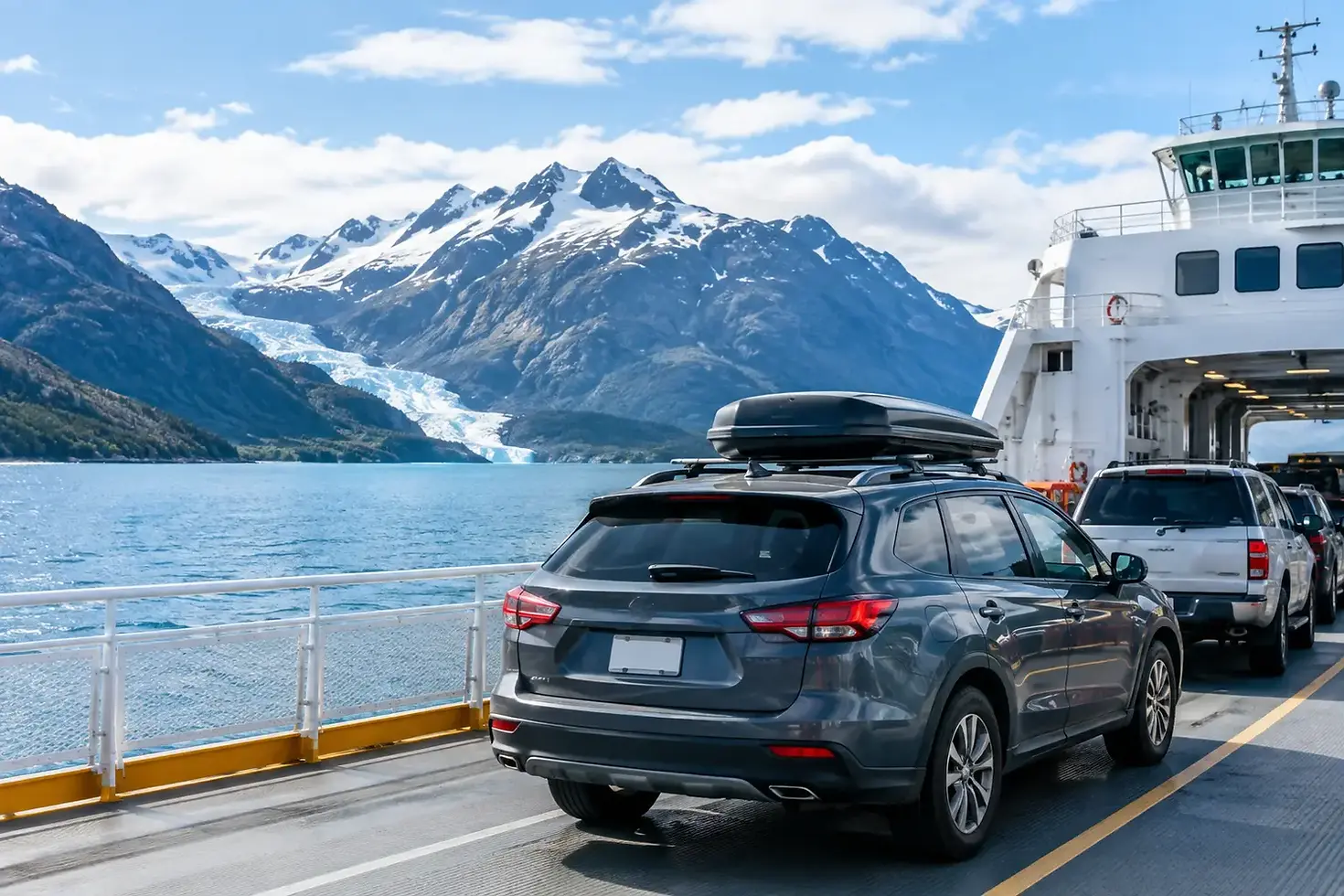
Patagonia Ferry Bookings With Your Vehicle
A ferry can be the difference between a well-paced Patagonia road trip and a two-day detour on rough, expensive roads. Patagonia ferry bookings with vehicle space deserve the same attention as your border crossings, especially when your route includes the Carretera Austral, the fjords south of Puerto Montt, or Tierra del Fuego. Passenger tickets may still be available when vehicle decks are full, so do not treat your vehicle as an afterthought.
For overlanders, the practical question is not simply whether a ferry runs. It is whether it runs on your travel date, accepts your vehicle’s dimensions, has room for it, and fits the timing of your next border or accommodation stop. In Patagonia, schedules can change with weather, demand, maintenance, and season. Build your route around confirmed vehicle space, not the other way around.
Which Patagonia ferries need advance vehicle bookings?
Not every short crossing needs months of planning, but several routes routinely create problems for travelers who arrive without a reservation. The longer and less frequent the sailing, the more important it is to reserve early.
The Puerto Montt to Puerto Natales route is the major long-distance option for travelers moving between Chile’s Lake District and southern Patagonia by sea. It is useful for travelers who want to avoid a major stretch through Argentina, but it is not a casual hop. Sailings are limited, voyages take several days, and space for cars, campers, and 4WDs can disappear well ahead of departure in high season.
The fjord crossings around Hornopirén, Leptepu, Caleta Gonzalo, and Fiordo Largo are central to the Carretera Austral route. They allow drivers to continue south through the Pumalín area rather than taking a substantial inland detour. These connections often involve more than one ferry and a road section between terminals. A delay on the first segment can affect the rest of your day, so leave room in the itinerary.
At the far south, the Punta Arenas to Porvenir crossing is a common route to Tierra del Fuego. The Primera Angostura crossing is another key connection between mainland Chile and the island. These are shorter trips, but vehicle decks are finite and popular travel dates fill quickly. Expect demand around Christmas, New Year, Chilean summer holidays, and the peak trekking season from December through February.
Other local crossings may be essential depending on your route. The Puerto Yungay to Río Bravo ferry, for example, helps connect the southern Carretera Austral corridor. Some smaller services are free or operate on a first-come basis, but that does not mean they are consequence-free. A missed departure can still mean hours of waiting.
What operators need to know about your vehicle
A vehicle booking is based on far more than “one car.” Give accurate details from the start. Ferry operators commonly price and allocate deck space according to vehicle length, height, width, and category. A compact SUV, a long-wheelbase 4WD with a rooftop tent, and a campervan may all be treated differently.
Measure your actual travel setup before booking. Include roof racks, rooftop tents, cargo boxes, bikes on rear carriers, spare tires, awnings, and trailers. Height is particularly easy to underestimate, and a roof load can move your vehicle into a different category. If you reserve as a standard vehicle and arrive with an oversized setup, the operator may charge a difference, move you to a later sailing, or refuse loading if there is no appropriate space.
You will normally need the license plate, vehicle make and model, and driver details. Keep your confirmation with the vehicle information accessible offline. Mobile signal at remote ports is not something to rely on.
If you are renting, confirm in writing that the rental company permits the specific ferry route. Most vehicle rental agreements allow normal ferry transport, but restrictions can apply to certain roads, remote areas, or cross-border legs. You also need to understand whether ferry delays affect your rental return date. A one-day buffer near the end of the rental can be inexpensive insurance.
If you own the vehicle, carry your registration and the documents you would use at a border. Chilean ferries are domestic transport, but your paperwork matters if your trip includes Argentina before or after the crossing. Travelers using a vehicle bought in Chile should keep ownership-transfer documentation organized while the final registration process is underway.
Fuel, gas, and loose gear
Arrive with enough fuel for the road after disembarkation. Remote fuel stations may have limited hours or queues, and some crossings land you far from the next reliable supply point. Secure bikes, boards, boxes, and recovery gear before entering the terminal. Ferry staff may ask you to turn off alarms and gas systems, and access to the vehicle deck can be restricted during the sailing.
For camper travelers, ask the operator about propane cylinders and onboard electrical use. Requirements vary by vessel and route. Do not assume you can sleep in the vehicle or use its facilities during the crossing.
How far ahead should you book?
For peak-season travel, reserve long-distance or low-frequency ferries as soon as your route and vehicle are confirmed. A practical planning window is several weeks to several months ahead for the Puerto Montt to Puerto Natales route and major holiday travel. For the Carretera Austral’s shorter ferry chain, booking ahead is strongly recommended when your dates are fixed, particularly with a camper, trailer, or tall 4WD.
Outside peak season, it depends on your flexibility. You may find availability closer to departure, but fewer sailings can make a cancellation or weather delay harder to absorb. In winter and shoulder season, the right approach is not necessarily to book every crossing far in advance. It is to keep your schedule loose enough to wait for the next safe departure.
Avoid booking tightly around an international flight, a vehicle sale appointment, or a fixed accommodation reservation. Patagonia rewards flexibility, but ferries expose itineraries that have no margin. Give yourself at least one spare day after an important crossing, and more if a remote route has only occasional service.
A booking process that prevents expensive mistakes
First, map the route by ferry segments, not just by destinations. “Driving the Carretera Austral” can include multiple terminals and several hours of road between them. Check whether your selected departures connect realistically, including check-in times.
Second, book the vehicle category using its loaded dimensions. Do not guess. If you are collecting a rental camper shortly before departure, ask for its exact length and height before purchasing ferry tickets.
Third, verify the cancellation and change policy. Weather is not the only reason plans move. Border delays, mechanical issues, a late vehicle handover, and road closures can all put you behind schedule. Flexible fares can be worth more than the initial saving when your trip has fixed commitments.
Finally, confirm the terminal, arrival time, and check-in requirement shortly before travel. For vehicle loading, operators often require arrival well before passenger boarding. Being late can mean losing the space you paid for, even if the boat has not visibly left the dock.
Common Patagonia ferry planning mistakes
The most common mistake is treating a ferry as a scenic activity instead of road infrastructure. If it is the only practical connection on your route, it belongs in the core itinerary. The second is booking based on a bare vehicle and forgetting that a rooftop tent or rear bike rack changes the dimensions.
Another frequent problem is trying to use a ferry to solve an already overpacked itinerary. A ferry can save driving distance, but loading, unloading, waiting, and weather disruption all take time. On a long sailing, you also need to budget for onboard accommodation or the cabin arrangement required by that service.
International travelers should also avoid separating vehicle planning from paperwork planning. Buying a car can make sense for trips of three months or more, but the purchase, ownership transfer, and eventual resale need to fit around your route. Suzi Santiago helps travelers organize those steps so a ferry departure is not lost to an administrative delay.
Before you drive to the terminal
Review the booking confirmation, vehicle dimensions, terminal location, and check-in time the day before. Bring identification, vehicle documents, payment backup, warm clothing, water, and food for the wait. Weather can be cold and wet even when the crossing itself is short.
Most of all, let confirmed vehicle space set the rhythm of the route. A Patagonia road trip is better when you can stop for a hike, wait out rain, or stay an extra night somewhere worthwhile instead of racing toward a ferry you may not be able to board.


Comments